Our Blog

Thanksgiving Trivia

November 27th, 2024
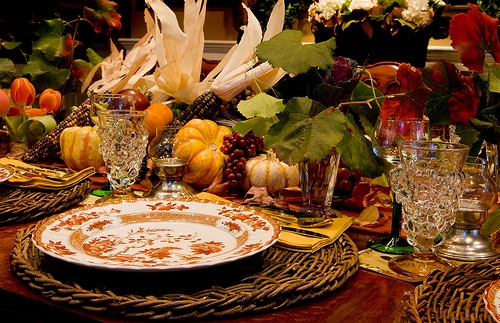
At Village Orthodontics we love learning trivia and interesting facts about Thanksgiving! This year, Dr. Groisser wanted to share some trivia that might help you feel a bit smarter at the holiday dinner table and help create some great conversation with friends and family.

The Turkey

There is no historical evidence that turkey was eaten at the first Thanksgiving dinner. It was a three-day party shared by the Wamponoag Indians and the pilgrims in 1621. Historians say they likely ate venison and seafood.

According to National Geographic, the dinner at the Plymouth colony was in October and included about 50 English colonists and 90 American Indian men. The first Thanksgiving dinner could have included corn, geese, and pumpkin.

Today, turkey is the meat of choice. According to the National Turkey Association, about 690 million pounds of turkey are consumed during Thanksgiving, or about 46 million turkeys.

The Side Dishes

The green bean casserole became popular about 50 years ago. Created by the Campbell Soup Company, it remains a popular side dish. According to Campbell’s, it was developed when the company was creating an annual holiday cookbook. The company now sells about $20 million worth of cream of mushroom soup each year, which is a major part of the recipe.

While there were likely plenty of cranberries for the pilgrims and Indians to enjoy, sugar was a luxury. What we know today as cranberry sauce was not around in those early Thanksgiving days. About 750 million pounds of cranberries are produced each year in the US, with about 30 percent consumed on Thanksgiving.

The Parade

Since Thanksgiving did not become a national holiday until Lincoln declared it in 1863, the annual parades were not yearly events until much later. The biggest parade that continues to draw crowds is the Macy's Thanksgiving Day Parade. Beginning in 1924 with about 400 employees, they marched from Convent Avenue to 145th Street in New York City. Famous for the huge hot-air balloons today, it was actually live animals borrowed from the Central Park Zoo that were the stars of the show then.

However you choose to spend your Thanksgiving holiday, we wish you a safe, happy and healthy holiday with those you love.


When should my child be seen for an orthodontic evaluation?

November 20th, 2024

Thanks for asking! It really depends on the dental age of the patient rather than their chronological age. Usually a good time to have your child evaluated by an orthodontist is after the front permanent teeth have erupted into the mouth or if there appears to be extreme crowding of the teeth.

The American Association of Orthodontists recommends that children between the ages of seven and nine should be evaluated by an orthodontist. There are times when an early developmental treatment is indicated to correct situations before they become major problems. In these circumstances the patient will most likely benefit from a second phase of orthodontics when all of their permanent teeth have erupted.

Most full orthodontic treatment begins between ages nine and 14, and lasts from one to three years, with two years being the average. It’s important, however, that children be screened at an early age for Dr. Groisser and our staff to assess if your child can benefit from orthodontic treatment and when treatment should begin.

We hope this helps, and invite you to give us a call if you have any questions about your child’s treatment at Village Orthodontics.

Top Things to do BEFORE You Get Braces

November 13th, 2024

So you’re about to get braces. Congratulations! You are taking a very smart step to improve the health of your teeth as well as get that killer smile in shape. But, as with anything that is good for you, there are a few things you will have to avoid while you “do your time.”

Some foods don’t do so great with braces. The foods listed below should be avoided while you are wearing your braces because they can pop the brackets and bend the wires. In other words, these foods can really ruin your day, and send you back to Village Orthodontics to get your braces repaired.

So before you hit the chair, hit the grocery and candy store – one last time – for:

  • Beef jerky
  • Raw carrots
  • Taffy
  • Pizza crust
  • Bagels and other crusty bread
  • Popcorn
  • Hard candy
  • Nuts and seeds

Dr. Groisser and our staff will give you more information about eating with braces. Some foods, such as apples, are okay as long as you cut them in pieces first. Others, like pudding and pasta, are fine just as they are. But then there is “the list”: the foods that are a big no-no and should be avoided. It won’t be forever, so hang in there.

Your braces time will pass before you know it and you can resume more normal eating. But before the braces go on, enjoy these tasty treats. Go ahead and indulge!

National Brush Day

November 7th, 2024

October 31—Halloween. Fourth Thursday in November—Thanksgiving. And, in between these two favorite autumn holidays, we have November 1—National Brush Day!

Okay, okay. Maybe National Brush Day isn’t quite as well-known as Halloween or Thanksgiving, but we take any opportunity to celebrate your dental health. So, let’s celebrate brushing!

After all, brushing is vital for healthy teeth and gums.

  • Brushing is your first line of defense against plaque. Plaque forms all day long. Plaque sticks to your teeth. Plaque is filled with bacteria which produce cavity-causing acids. Brushing regularly means plaque won’t stay on your teeth long enough to cause serious tooth decay.
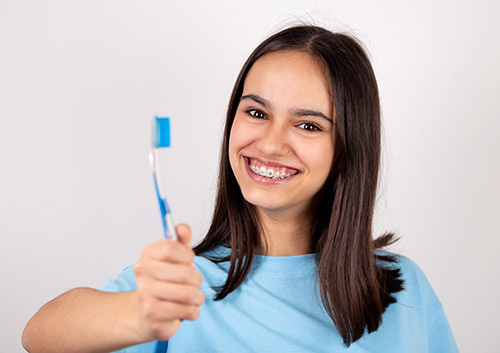
  • Brushing effectively is especially important while you wear braces. Plaque collects around brackets and can cause enamel discoloration if it’s allowed to build up.
  • Brushing is also important for your gum health. Angling your brush to carefully clean plaque and bacteria away from your gum line helps prevent gum disease.

To make the most of the time you spend brushing, let’s take a moment to review some basics on National Brush Day.

Are You Brushing Correctly?

  • Big, broad brushstrokes aren’t the answer. Instead, use short up-and-down or circular strokes over each tooth—outside, inside, and on the flat surfaces of your molars.
  • Because plaque forms all day, you need to keep on top of it. Brushing at least twice a day for two minutes each time is a good general rule, but doesn’t always hold true during orthodontic treatment.
    • If you wear braces, Dr. Groisser will probably recommend brushing after each meal or snack to make sure plaque and food particles don’t stick to your teeth and your braces.
    • Take advantage of the special orthodontic brushes that are available if your old brush isn’t cleaning your braces (and your teeth!) as well as you’d like. A brush with a smaller head or different shaped bristles might make all the difference.
    • If you have aligners, you take them out to eat. It’s always a good idea to brush before you replace them. Otherwise, food particles which would normally be brushed away or washed away by saliva are trapped next to your teeth.
  • Brushes are meant to clean, not to scrub. You don’t need a heavy hand for cleaner teeth.
  • Which also means, there’s almost never a good time to brush with a hard-bristled brush. Hard bristles, along with hard brushing, can actually damage your enamel. Stick to a soft-bristled brush for dental TLC.

Are You Taking Care of Your Brush?

  • To clean away bacteria and viruses you might have picked up during the day, wash your hands before brushing and flossing.
  • Shake your brush dry when you’re finished and then let it air-dry upright with the handle pointing down. Only use a case for travel, and make sure it has air holes for ventilation. (Bacteria thrive in a wet environment.)
  • If your toothbrush lives in the bathroom, close the toilet seat before flushing to avoid airborne particles.
  • No matter how close you are to your family members or roommates, don’t share your toothbrush. Sharing doesn’t mean caring in this case—it means sharing germs. Your brush should keep a healthy distance from other brushes as well.
  • And no matter how fond you are of your brush, be prepared to replace it often! Most brushes last three to four months at best, because bristles start to fray and can’t clean effectively after several months of use.

It’s no coincidence that National Brush Day comes right after Halloween, the most sugar-filled holiday of them all. So, how can we mark the occasion?

Take a moment to review your brushing habits. Check out the brushes designed for orthodontic treatment. Treat yourself to a new toothbrush. Brushing your teeth properly is one of the easiest things you can do to protect your oral health. That’s something to celebrate!

sesame communicationsWebsite Powered by Sesame 24-7™ Site Map Back to Top